Saturday, June 30, 2007

What is Your Worldview and what is It based On?

I have been fascinated as I have been on this journey with Jesus. Beginning that day when He reached out to me and rescued me from the mire and dust to see how many false things I believed about the world around me, mankinds nature and abilities and the spirit realm.

Dr, Ed Murphy speaks about the Biblical worldview in his book 'The Handbook for Spiritual Warfare. His book, which I highly recommend for its breadth and scope of topical coverage, is one of the most comprehensive books on the subject or Spiritual Warfare. Below is a link and some text from Thomas nelson the publisher. "The Handbook for Spiritual Warfare is the most thorough treatment available of biblical and theological foundations and practical concerns for spiritual warfare. Further revised and updated for the 21st century. http://www.thomasnelson.com/consumer/

The Book:
1. Equips leaders and mature believers
2. Comprehensive coverage of all 3 dimensions of spiritual conflict: the World, the Flesh, and the Devil. Endorsed by Frank Peretti, Dr. C. Peter Wagner, and others." http://www.thomasnelson.com/consumer/product_detail.asp?dept_id=11850&sku=0785250263&TopLevel_id=110000 I would not recommend this book for new believers but I do highly recommend the books below for all bel;ievers!

There is another book that opened my eyes to the area of Worldview many years ago and is still around, now in its 4th addition. James Sire's "The Universe Next Door" is a wonderful resource and should be mandatory reading for all Christians who interact with anyone who was not been raised in the Church. Sub titled 'A Basic Worldview Catalog' the reader of this book is treated to insights, such as how the Church's weakened Spiritual state led to the rise of false religions and a dependency on science as the underpinning of mankind’s belief systems. Below are some of the materials on the IVP web site. IVP is the publisher and I commend them for continuing to publish this excellent work.


About the Book:
When The Universe Next Door was first introduced nearly thirty years ago, it set the standard for a clear, readable introduction to worldviews. In concise, easily understood prose, James W. Sire explained the basics of theism, deism, naturalism, nihilism, existentialism, Eastern monism and the new consciousness.

The second edition was updated and expanded to include sections on Marxism and secular humanism, as well as a completely reworked chapter on what is now widely known as New Age philosophy rather than new consciousness. And the third edition offered further updating and revisions, including a thoroughly revised chapter on New Age philosophy and, perhaps most importantly, a new chapter on postmodernism.

Now the fourth edition refines the definition of worldview itself, incorporating Sire's thinking and teaching during the past decade. (His recent work is showcased in a new book, Naming the Elephant, also published by IVP.)

The Universe Next Door has been translated into several languages and has been used as a text at over one hundred colleges and universities in courses ranging from apologetics and world religions to history and English literature. With the publication of the fourth edition, this book will continue to aid students, teachers and anyone who wants to understand the variety of worldviews that compete with Christianity for the allegiance of our minds and hearts.

If you want to know more go to the IVP web site http://www.ivpress.com/cgi-ivpress/book.pl/code=2780

IVP Extra!
Available as an audio book from Hovel Audio.

Table of ContentsPreface to the Fourth Edition

1. A World of Difference: Introduction
2. A Universe Charged with the Grandeur of God: Christian Theism
3. The Clockwork Universe: Deism
4. The Silence of Finite Space: Naturalism
5. Zero Point: Nihilism
6. Beyond Nihilism: Existentialism
7. Journey to the East: Eastern Pantheistic Monism
8. A Separate Universe: The New Age
9. The Vanished Horizon: Postmodernism
10. The Examined Life: ConclusionIndex

Features & Benefits
1. Introduces the Christian worldview and its major alternatives, both Eastern and Western
2. Explains and evaluates
3. Clear and nontechnical
4. New edition is revised and updated throughout
5.Incorporates refinement of the definition of a worldview
6. Over 250,000 copies in print in more than one dozen languages worldwide

Naming the Elephant: Worldview as a Concept


What is a worldview?
What lies behind your thoughts about almost everything?

For more than thirty years, James W. Sire has grappled with this issue. In this book he offers readers his most mature thought on the concept of a worldview, addressing such questions as
What is the history of the concept itself?
What is the first question you should ask in formulating a worldview?
How are worldviews formed existentially as well as intellectually?
Is a worldview primarily an intellectual system, a way of life or a story?
What are the public and private dimensions of a worldview?
What role can worldview thinking play in assessing your own worldview and those of others, especially in light of the pluralism in today's world?

In his widely used textbook The Universe Next Door, first published in 1976, Sire offered a succinct definition of a worldview and catalogued in summary fashion seven basic worldview alternatives. Students, critics, new literature and continued reflection have led him to reexamine and refine his definition of a worldview. This companion volume to The Universe Next Door is the fruit of that effort.

Here is an excellent resource for exploring more deeply how and why worldview thinking can aid you in navigating your pluralistic universe.

Table of Contents

Acknowledgments
Preface
1. Camel, Kangaroo and Elephant
2. Worldview Definitions: From Dilthey to Naugle
3. First Things First: Being or Knowing
4. Flesh and Bones: Theoretical and Pretheoretical
5. Rational System, Way of Life and Master Story
6. Worldviews: Public and Private
7. Worldview: A Refined Definition
8. Intelligent People Who Clash by Day: Worldviews as a Tool for AnalysisIn


Understanding Matthew: The Early Christian Worldview of the First Gospel

This work, a companion volume to Westerholm's Understanding Paul provides an introduction to the early Christian worldview of the First Gospel. The study is neither a verse-by-verse commentary nor a narrowly focused academic monograph. It is an engaging reader's guide to Matthew's worldview and his story of Jesus' life, preaching, andcall to discipleship. Westerholm's goal, as he writes in the first chapter, is that readers might "begin to understand how Matthew made sense of things, and to see how it makes sense to make sense of things that way." His introductory chapter examines the idea of a worldview. He then considers the centralaspects of Matthew's worldviewIsrael's understanding of God, his dealings with the Jewish people, and Jesus' preaching about God's kingdom.
Go to the equippers network Blog for my article on the Role of Biblical Immersion in forming our workdview. http://equippersnetwork.blogspot.com

Sunday, June 10, 2007

The Spirit Formed Life

In a world of three-day diets and game-show millionaires, we can easily lose sight of the importance of the spiritual disciplines the Lord has given us for victorious living in Christ. Jack Hayford invites readers to rediscover the power and the blessing that come from such disciplines as prayer and fasting, feeding on GodÕs Word, submission to His will, daily worship and experiencing the release of repentance and forgiveness. Pastor Jack examines and celebrates what it really means to be an effective disciple of Christ in modern times.

In a world with so much competing for our attention, it’s easy to neglect or lose sight of the importance of the spiritual disciplines the Lord has given us for victorious living in Christ. Pastor Jack Hayford shows new believers and mature Christians alike how to rediscover the power and blessings of such basic disciplines as prayer and fasting, daily worship, and the release of repentance and forgiveness. What Pastor Jack offers is an inspiring guide to the Spirit-Formed life – where God guides and we thrive!

Tuesday, May 22, 2007

The Fountain Head

There is no greater Resource than the Bible itself. It is the inspired, 'God breathed' communication of God to people. To gain true understanding of the Bible also known to believers as God's Word, the Bible itself tells us we must know the author Himself.

The Spirit of God or the Holy Spirit is the one who illuminates or reveals it's truth to us. Without the Holy Spirit the Bible is a 'Stumbling Block or Foolishness' to us.

There are many good resources which can help us understand the Bible, but they must never replace the Word of God as the source of truth and life itself for us who have recieved Jesus as our Lord and Savior.

Wednesday, March 28, 2007

Seven Practices of Effective Ministry

Discover seven simple ways to revitalize your ministry through the parable of Ray Martin, the founding pastor of Meadowland Community Church. Busyness, pressures, and programs have blurred his original vision. But a night at a most remarkable baseball game changes everything! Pastors and church leaders will welcome this refreshing approach to ministry. 240 pages, hardcover from Multnomah.

There’s no scoreboard in the sanctuary, and the only plate is probably for the offering. But every church leader needs to know how to win, and every congregation needs to know when to cheer. This insightful book speaks to every church leader who yearns for a simpler, more effective approach to ministry. An engaging parable about one overwhelmed pastor is followed by an overview of seven successful team practices, each one developed and applied in a ministry setting. Reinforced by relevant discussion questions, these clear, easy, and strategic practices can turn any ministry into a winning team.
http://northpointresources.com/book_detail.aspx?ISBN=15905237337


Seven Practices of Effective Ministry By: Andy Stanley, Lane Jones, Reggie
http://www.practicallyspeaking.org/

Practice #1 - Clarify The Win: Even the best team can't score if it can't find home plate. In this conversation we'll discuss the importance of clearly defining a win at every level of your organization.

Practice #2 - Think Steps Not Programs: Before you start anything, make sure it takes you where you want to go. In this conversation we'll discuss the importance of a clear ministry strategy.

Practice #3 - Narrow The Focus: The longer a ministry operates, the more complex it can become. In order to maintain a winning organization, we must continually face the challenge of narrowing its focus.

Practice #4 - Teach Less For More People are bombarded by thousands of messages every week. If the local church is going to be effective, it must cut through the noise. It must learn to say only what needs to be said to the people who need to hear it.

Practice #5 - Listen To Outsiders: Why don’t the unchurched people in your area go to church? Could it be because you’re focusing on who you’re trying to keep instead of who you’re trying to reach?

Practice #6 - Replace Yourself :We are all replaced eventually. The wisest leaders will extend their influence by finding and mentoring their replacements.

Practice #7 - Work On It: All of us work in ministry every day, but is that enough? Working on your ministry requires time to evaluate your work and to celebrate your wins.

Thursday, December 07, 2006

Christian Podcast Sites


Check Out what claims to be thelargest Christian Poscast site.

Wednesday, November 22, 2006

Wasting Time With God

Wasting Time With God

A Christian Spirituality of Friendship with God By Klaus Issler

This information is from the IVP website. The link is given below.
When it comes to developing a deep, trusting relationship with God, efficiency and productivity are not the answer. It's far better to "waste" time with him, to just enjoy being with him. After all, that's how any friendship grows.
But making room for God in the midst of our fast-paced lives is not an easy task. Just as time with our best friends can get squeezed out by the rush of activities, so can time with God. Even "wasting time" with God means making a commitment and setting priorities--whether it's something we enjoy or not.
Beginning with the supposition that God desires friendship with us, Klaus Issler encourages us to consider seven character traits and to develop their companion disciplines: friendship, humility, faith, commitment, communication, apprenticeship and partnership. Here is a full-orbed model of Christian spirituality that will be of lasting value. (IVP web Site)

Visit Klaus Issler's website at Biola University!
It has a great deal more info.
http://people.biola.edu/faculty/klaus/wtwg.htm#toc

Table of Contents
Foreword by James M. Houston 9

Acknowledgements 11
1. The Quest: Knowing God More Deepl 13

Part I: Making Room for God
2. Friendship: Approaching the God Who is Love. 37
3. Humility: Honoring the God Who is Holy 67
4. Faith: Seeing the God Who is Invisible 90

Part II: Deepening our Friendship with God
5. Commitment: Seeking the God Who Hides 123
6. Communication: Hearing the God Who Speaks 151
7. Apprenticeship: Yielding to the God Who Disciplines 183
8. Partnership: Asking the God Who Answers 214
Notes 249
Indices 283

IVP also has Book Excerpts
@http://www.ivpress.com/cgi-ivpress/book.pl/toc/code=2280

Features & Benefits
*offers a full-orbed model of Christian discipleship
*shows you how to make room for God amid daily responsibilities and pressing events *highlights the value of developing friendship with God
*explores the relationship between character development and spiritual disciplines
*considers seven disciplines: friendship, humility, faith, commitment, communication, *apprenticeship and partnership

Thursday, October 19, 2006

Next Generation Leadership

This book is listed in a recent article from Leadership Journal online, How Comptent Are You? Listed and linked below.

The Next Generation Leader has been challenging young Christians eager to learn, grow, and lead in ministry or in the marketplace since its original release in 2003.

Now with an all-new look, this repackaged version continues to advance the mission of the first release. Mentoring young leaders as they face the unique issues of a changing world has been pastor and bestselling author Andy Stanley's passion for more than a decade. Here he shares material from his leadership training sessions, developed to address essential leadership qualities such as character, clarity, courage, and competency. This is the perfect guide for any new leader - or for the mentor of a future leader! Get more info at the link below.


http://www.christianbook.com/Christian/Books/product/?item_no=525396&p=1006328#curr

The artilces below are also important for leaders.

Can I Trust You? Strengthening the three legs of trust. by Angie Ward,
http://www.christianitytoday.com/leaders/newsletter/2006/cln60814.html

Assessing Character Part two of a series, "The Three Legs of Trust".by Angie Ward
http://www.christianitytoday.com/leaders/newsletter/2006/cln60918.html

How Competent Are You? Part three of a series, "The Three Legs of Trust."by Angie Ward
http://www.christianitytoday.com/leaders/newsletter/2006/archives.html

Tuesday, October 10, 2006

Discipleship Journal's Best Bible Study Methods

One of the featured books this month is Discipleship Journal's Best Bible Study Methods from Navpress. Below is a quote from their site about this book.

"WHO SAID BIBLE STUDY IS BORING? NOT US! Discipleship Journal® believes God’s Word should not only be instructive, challenging, and life-changing, but also creative, intriguing, and just plain fun. That’s why we compiled this unique handbook of 32 ways to study Scripture, drawn from the pages of our magazine. From word studies to role-playing to personal reflection, both pastors and laypeople explain how to infuse study with fresh insight—and without compromising the Bible’s meaning or integrity. Whether you’re new to Bible study or a seasoned pro, you can unearth deep spiritual gems and enjoy the process. So dig in and discover the joy of getting into God’s Word. "

PRODUCT DETAILS Discipleship Journal's Best Bible Study Methods [ISBN: 1576832910](Paperback)[size 6x9] For more information and a sample chapter click on the link below.
http://www.navpress.com/Store/Product/1576832910.html#ProductDetails

Tuesday, September 26, 2006

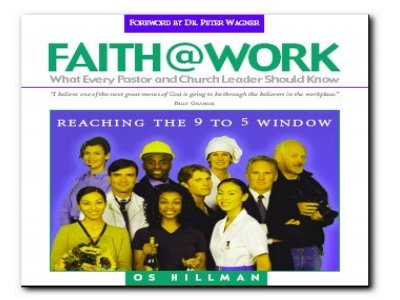
The Faith@Work Movement

Today the Church has once again been awakened to the need to Equip The Believer so that they can be an effective tool in the market place and be salt and light to the world in which we all live. Below is a great tool to help in that Equipping process.

"An excellent resource for the Body of Christ and a great encouragement to see the practical ways others have implemented their faith at work. Kudos, Os. A job well done!" Dennis Peacocke, President, Strategic Christian ServicesIs there a real move of God in the workplace? If so, what do pastors and church leaders need to know? How can the church mobilize workplace believers to impact their city and nation? The Faith@Work Movement by Os Hillman will answer these and many more questions about the modern-day faith at work movement. Foreword by Dr. Peter Wagner.

Chapters include:
1. A Genuine Move of God Is Taking Place In The Workplace
2. The Workplace Ministry of Jesus and Today's Great Divide
3. Indicators of a Problem
4. Twelve Fallacies of Belief Often Held by the Church and a Five-Year Forecast
5. Work is Ministry/Work To Minister
6. Letter to a Pastor
7. Launching a Work-Life Ministry in Your Local Church
8. Establishing Encouraging Relationships
9. Church Case Studies
10. Ten Ways to Support Ministry in the Workplace
11. Reaching the 9 to 5 Window: 26 Action Steps You Can Take Right Now
12. What is the End Goal?

Two great companion resources to this book are Uniting Workplace Leaders and the Local Church audio CD. and The Church In The Workplace book by Peter Wagner.

Monday, September 25, 2006

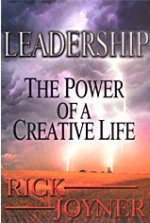
Leadership: The Power of a Creative Life by Rick Joyner

The Following material is a clip from the The Elijah List which is a brief Part of Rick Joyners New bookRick Joyner: Leadership: The Power of a Creative Life


Unity and Diversity
Two things that we know the Lord especially loves are--unity and diversity. The Lord loves diversity so much that He even makes every snowflake different. No two trees are alike. Every leaf is different from every other leaf on the planet. He made every human being different from every other human being. The Lord's creativity and love of diversity is prevalent throughout His creation. Unity in diversity is a basic principle of His government. It is therefore understandable that these two would be blended into a fundamental principle of how He will rule in His Kingdom. The Lord also loves unity. If you knew you only had a few hours left to live, your prayers would certainly be focused on the most important issues of your heart. The Lord spent His last night on the earth praying, and the dominant theme of that prayer was the unity of His people. The words "unity" and "diversity" put together form the word "university." The original purpose of the university was to bring together into unity the study of all the different subjects and disciplines. True unity is a unity of diversity, not a unity of conformity. To seek this and maintain it is a noble cause, and is the basis of Kingdom government. Authority exercised in one realm can have consequences in many others. Just as the different tribes all had their own inheritance, they also had to maintain a relationship to all of the other tribes and keep in their hearts their vision for being one nation. We must do the same. Aaron, the high priest, carried the stones of all of the tribes over his heart on the breastplate. If we are going to walk in the high calling of God, we, too, must keep all of God's people on our hearts, not just our own tribe, church, or movement. This does not mean that we do not have a great and specific vision for our own tribe, but we must always keep the others on our hearts as well and be considerate of the others in our actions. For the original twelve apostles to function together, they had to have tremendous humility and consideration for the others. This remains a foundation of true spiritual authority. As we are told in James 4:6, "God is opposed to the proud, but gives grace to the humble." One of the most basic characteristics of one who is truly humble, is that they are teachable, like a little child. Those with true humility recognize that they only see in part and know in part, so they are always open for the parts that must come from others. For the very foundation of that government, it would be hard to imagine a more diverse group than the twelve apostles being chosen and called to work together. Without understanding the Lord's devotion to diversity in all that He does, we will not understand a very basic characteristic of His nature or His Kingdom.The Lord's Team
On the Lord's team, He had different apostles with different gifts. Peter was an extraordinary evangelist. John was more prophetic. James was more pastoral. Others emerged as great teachers and missionaries. Together, their individual strengths would help the others weaknesses and vice versa. The first century leadership of the church was also a relay in which the dynamic leadership changed as was needed. Peter began on the Day of Pentecost, but after the evangelism was well-established, the dynamic leadership passed off to James, the pastoral one, which was obviously the strength that was then needed to establish all of the new converts. Later, after the church was dispersed abroad from its base in Jerusalem, it appears that Paul was the defacto dynamic leader of the body of Christ at the time. His teaching, especially on the New Covenant "grace versus law," etc., was desperately needed at that time, and it was right that the focus should be upon him. Then, after the passing of the others, John, the prophetic one, emerged as the dynamic leader, whose revelation message would help prepare the faithful ones for the generations to come.Flying in Formation
Years ago, when I inquired of the Lord about how to have a movement that would not stop moving until it had grown up into the fullness of Christ, He gave me a simple, but surprising answer. He said that to do this, we would have to use the wisdom of the geese. I then studied geese to see what this might mean, and I quickly understood it.
Geese fly in a formation in which they all draft behind one another, which reduces the effort required for flying 20 to 35 percent. Because of this, they can fly much farther than if they did not fly in formation.Likewise, there is a formation that the Lord has called each of us to be in--the local church. Christian growth in every way will be far slower and more difficult when we try to do it alone than when we are rightly connected to His body. In fact, it is quite clear in the New Testament, that full maturity simply is not possible without a vital local church life. This includes knowing our ministries and spiritual gifts, and functioning in them in harmony with the other ministries and gifts in the local church--flying in formation. True local church life is going to be difficult at best. It is hard to get along with other people, but it is essential for true Christian maturity, and is in fact much easier than trying to do it alone. I have heard quite a few people say that they love the Lord, but just don't like His people. The Scriptures are clear that this is not possible, as we read in I John 4:20-21: "If someone says, 'I love God,' and hates his brother, he is a liar; for the one who does not love his brother whom he has seen, cannot love God whom he has not seen. And this commandment we have from Him, that the one who loves God should love his brother also."

A truth that not many want to hear is that the harder the relationships are in the local church, the faster and easier it is to mature in Christ. Love is the essence of maturity in Christ, and if we cannot love those whom we are going to spend eternity with, we are not going the right way, at best. So flying in formation is crucial or we will be left far behind in true Christian maturity.

Leadership Changes and Pruning
We must also consider that in such a formation, someone will have to be in the lead. That goose is obviously not able to draft behind the others, and therefore will tire at a rate of 20 to 35 percent faster than those following. Therefore, for the whole formation not to bog down because the leader is tired, we must learn to change leadership regularly. This is in fact what the first century church did, transferring the point position from Peter to James, to Paul to John, then to different ones who are called "the early church fathers." This really should be done not just with the leadership position of the local church, but with every position. If your children's ministry, worship, home groups, evangelism, teaching, or any other ministry in the church starts to plateau or stop making progress, you may want to consider giving that leader a break and letting him or her draft behind someone else for awhile. Of course, many will consider that a demotion or a failure, especially if they are territorial or have their spiritual identity wrapped up in their ministry. This will usually need to be delicately negotiated, but it is as essential for that leader's spiritual health as it is the church's. Every time we have implemented this, it has not only enabled the specific ministry to accelerate its progress again, but enabled the leader to receive rest and begin to advance in their own personal growth again. After a rest, he or she will be ready for leadership again. We need to also consider that just because a church or ministry which is a part of the church plateaus, this does not necessarily mean a leadership change is required to get it going again. There are times of rest, just as the pillar of cloud would sometimes stop for a period of time to allow Israel to rest. There are also times of pruning in which churches or ministries are cut back so that they could bear more fruit in the future.
All of these things need to be weighed, but if there is a true team leadership in the church and in the ministries, then switching leadership from time to time will be a positive experience for all. As one on our ministry team who was a former NBA player said, "When someone gets the hot hand, every great team will quickly recognize it and feed them the ball." Also, just because one passes off the point position of leadership to another permanently, this does not mean that they do not continue to be leaders. In fact, they can become even more fruitful in their ministry if they are not in a point position of leadership.
The Lord Himself was the Master of this grace of humility in passing off the leadership to another. He even told His apostles that it was expedient for Him to leave in the flesh so that the Holy Spirit could come.


Rick JoynerMorningStar Ministrieswww.morningstarministries.org A more in-depth study of these and other leadership principles are addressed in Rick Joyner's book, Leadership: The Power of a Creative Life, which can be purchased below.