Tuesday, January 22, 2008

Transformational Discipleship and Spirit Filled Resources for Discipleship

The following resources and text can be found @http://discipleship.ag.org/index.cfm
These resources are a result of the AG Commission on Discipleship.
These resources can be purchaed@ http://www.gospelpublishing.com/store/startitem.cfm?item=020270


Transformational Discipleship by Charles Crabtree

Recognizing the crisis facing the church in America, Crabtree gives motivating insights and practical applications for:

• Making small groups biblically sound and Sunday School classes relational
• Establishing and sustaining the ultimate church growth mode
Building faith and enthusiasm for discipleship in your church
• Creating an effective church between SundaysHardcover, 176 pages


Transformational Discipleship Teaching DVD


Item Number: 26TW0955
Transform discipleship in your church with the help of this easy-to-use teaching DVD. Transformational Discipleship comes to life as author Charles Crabtree shares his heart about discipleship and adds further insights and practical application for each of the ten chapters.

Designed for group or individual use, this DVD will spark discussion and motivate Small group leaders
Sunday School teachers - Discipleship directors - Pastoral staff 10 Sessions-10 minutes each

The New Believers Handbook
Get new believers off to a great start with this guide for the first weeks of their spiritual journey.

Short chapters share insights on topics like prayer and being filled with the Holy Spirit as well as suggested daily Bible readings from the Book of Mark.

Adapted from Now What?

A Guidebook for New Christians.


The New Believer’s Friend Handbook
Mentor’s companion book. Includes the dos and don’ts for spiritual parenting, lesson outlines for each chapter of The New Believer’s Handbook, and full text and answers to study questions.


Seven Practices for Every Follower of Jesus
In Seven Practices for Every Follower of Jesus, Thomas E. Trask gives basic disciplines believers can apply to grow in faith and personal effectiveness in helping fulfill the mission of the church.

Topics include:
Be Faithful in Prayer
Read and Study God’s Word Daily
Share Message of Christ with Nonbelievers
Depend on the Spirit in Daily Life
Continue to Grow and Disciple Others
Support Missions
Serve the Poor and Suffering

Nothing’s Too Hard for God Small Group Discussion DVD
Bring the Nothing’s Too Hard for God theme into your Sunday school, small groups, or mid- week services with our Small Group Discussion DVD hosted by Scotty Gibbons. This powerful DVD offers eight separate discussions built on the topics of forgiveness, loneliness, broken relationships, illness, fear, financial need, loss, and addiction. Each topic is depicted through true-life stories of individuals who struggled before discovering—nothing’s too hard for God. Each story is presented in a 10-14 minute video with planned pauses for discussion and group interaction. Our DVD comes with a separate CD of printable files containing questions and notes for leaders. Each story corresponds with eight campaign postcards, print ads, TV ads and Radio ads.
DVD contains 8 discussion videos and separate CD with printable notes for leaders.
DVD also includes navigation for playing testimonies only, without studio discussion segments.

Connections Small Group Studies (Downloadable)
These topical studies are the perfect way to start discussion and change lives in your church.

Each downloadable study features interactive questions, insightful notes, and inspiring points that will get your group talking.

Plus, the downloadable format offers a simple, inexpensive way to meet the needs of your small groups. $1.99 per lesson


Relationships Poster: “Love God/Love Others” (Free Downloadable)
Have you ever heard it said that discipleship is all about relationships? This visually stunning poster expresses the importance of our relationship with God and with others.

This FREE resource is available for downloading in various sizes and includes a version with Scripture (Matthew 22:36-40) and without. Can be used in a variety of ways, including websites, bulletins, newsletters, banners, posters, and more.


Discipleship Solutions Kit From brand-new believers to mature Christians, this kit offers something for everyone in your church:
• Transformational Discipleship with Teaching DVD
• The New Believer’s Handbook with Friend Handbook
• Two sample small group and Bible studies
• God’s Word for Today and Bible Reading Guide (sample backdated issues)


Small Groups and Discipleship Initiatives http://discipleship.ag.org/index.cfm

Discipleship is more than an important program in the church. It is the great priority found in the Great Commission. It is the ultimate proof of effective ministry and genuine church growth. It is the will of God and the desire of Jesus. It is the foundation of a stable faith and the means of rich and rewarding relationships with God and man.

The answer to all the challenges facing the church today is a Spirit-filled laity who is not ashamed of the gospel and loves the Lord 24/7. The Commission on Discipleship is committed to putting dynamic and relevant resources into the hands of every church leader. This website is the portal to all of the Assemblies of God resources for discipleship.

Small Groups – Welcome to the world of the Assemblies of God small groups! Small Groups have the potential of creating dynamic disciples through nontraditional means and ministries. This site gives church leaders wonderful ideas and resources to help address local situations, it provides opportunities to study other churches with effective small groups, and it includes a discussion forum for the exchange of discipleship and small group ideas.

Personal Bible Study and Devotions – A daily discipline with God and His Word for the purpose of gaining a greater intimacy with Christ and His truth. This may also include family devotions.

Pre-Conversion Discipleship – The process of intentionally establishing relationships with pre-converts in order to lead them to Christ. It views discipleship as a process, not an event; with each step that brings someone closer to becoming "a fully devoted follower of Christ" part of that process.

New Convert Care – An intentional ministry of linking spiritual mothers and fathers with babes in Christ for the purpose of spiritual guidance and protection of a new believer’s life.
http://discipleship.ag.org/index.cfm

We Build People – A values-driven philosophy (not a program) designed to help the pastor, his leadership team and the local congregation to respond to Christ’s call to "make disciples."
http://discipleship.ag.org/Discipleship/index.cfm

Tuesday, January 15, 2008

Making Disciples: Tools to Get Going in 2008

2008 is a year of new beginnings. You may have earnestly desired to make diciples but may have given up for one reason or another. You may have a program in place but desire to see greater results. I recommend reading Barna's book first and then look over the rest and pick the one that seems to fit your interest and needs.

In a previous post on my Equippers Network Blog http://equippersnetwork.blogpot.com/ I wrote an article titled 'What Does Success Look Like In Your Church?' Since each church has it's own story and distinctives your discipleship progam will have a different look and feel but the common elements that make passionate effective disciples will be much the same.

I want to challenge you to take the next step in being obedient to the great commission and "Make Disciples of all nations and people groups."

Below is a short list of books to help bring about a proper worldview and ideas for accomplishing our assignment to make disciples of all nations in Matthew 28:20 and to equip them to fulfill God's will by doing the work of the ministry, building up the body of Christ and bring them into maturity in the full measure of Christ as described in Ephesians 4:11-14.


1. Becoming a Healthy Disciple:
Ten Traits of a Vital Christian by Stephen A. Macchia

Are you becoming a healthy disciple? Discipleship is a life-long apprenticeship with the Master, Jesus Christ. He does not expect perfection, only heart and skill development. Becoming a Healthy Disciple outlines ten traits that will help you grow as a Christian. Stephen Macchia looks to John as a human example of a life lived close to Christ. He cites John's Gospel as well as the experiences of himself and others to bring the traits of discipleship into modern context and help you develop them in your own life.


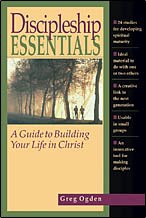
2. Discipleship Essentials
A Guide for Building Your Life in Christ By
Greg Ogden

"Jesus had a big enough vision to think small. Focusing on a few did not limit his influence. Rather, it expanded it! Discipleship Essentials will help you influence others as Jesus did--by investing wholeheartedly in a few."
http://www.ivpress.com/cgi-ivpress/book.pl/code=1169


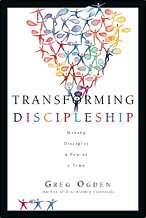
3. Transforming Discipleship
Making Disciples a Few at a Time By Greg Ogden


"Biblical, practical and tremendously effective, Transforming Discipleship provides the insights and philosophy of ministry behind Ogden's earlier work, Discipleship Essentials. Together, these ground-breaking books have the potential to transform how your church transforms the lives of its people."
http://www.ivpress.com/cgi-ivpress/book.pl/code=2388


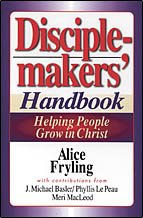
4. Disciplemakers' Handbook
Helping People Grow in ChristEdited by Alice Fryling

"What does a healthy discipling relationship look like? What do you do together? In order to answer these and other questions, Alice Fryling gathered a team of experienced disciplemakers. Together they give us practical help in such areas as overcoming our fears about discipling others, beginning a discipling relationship, how to be a friend, learning how people change, modeling the Christian life, using Scripture in disciplemaking, how to help a friend who hurts, and helping others share their faith."
http://www.ivpress.com/cgi-ivpress/book.pl/code=1266

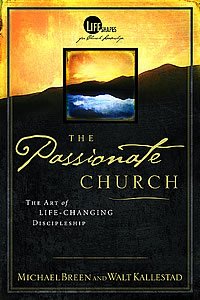
5. The Passionate Church
Lifeshapes Series
Author: Mike Breen, Walt Kallestad

"Church, for many pastors and leaders, has become increasingly difficult. Things that used to work, don't work anymore. The landscape of Church and culture have changed beyond recognition. Pastors everywhere wonder—Is surviving all we can hope for? Is this really Church the way Jesus intended?"
http://www.cookministries.com/catalog/index.cfm


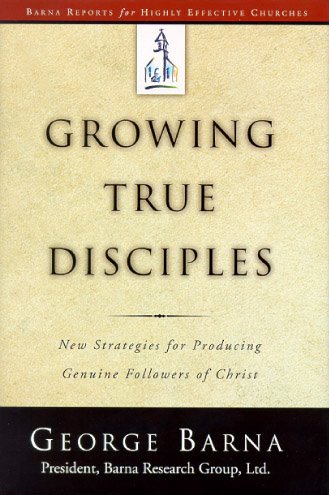
6. Growing True Disciples by George Barna

"How are we doing in discipleship today? In this analysis of American Christians and Protestant churches in relation to discipleship, you will discover many insights into what we're doing, how we're doing, where we're going, and what new directions we might take to enhance the disciple-making ministry of the Church."
http://www.barna.org/FlexPage.aspx?Page=Resource&ResourceID=55


7. The Training of the TwelveBy: A.B. Bruce
Published by Kregel Publications / 2000.

" Jesus knew his disciples' training was crucial to the success of his ministry. Equip your church for effective service by using the Master's proven principles! Offering a dynamic model for leadership and discipleship, Bruce's timeless classic encourages leaders and laypeople to develop their gifts for God's kingdom by growing in prayer, faith, self-sacrifice, holiness, and more. 576 pages, softcover from Kregel. "


8. The Complete Book of Discipleship
On Being and Making Followers of Christ
by Bill Hull

The Complete Book of Discipleship is the definitive A-to-Z resource on discipleship for every Christian. It pulls together into one convenient, comprehensive volume relevant topics related to spiritual growth, transformation, spiritual disciplines, and discipleship in the local church and beyond. Best of all, it’s produced by The Navigators, the internationally respected organization with more than seventy years of practical discipleship ministry experience. Well organized, fully indexed, and readily accessible, The Complete Book of Discipleship will help you gain a wealth of insight from experts in the field, whether by reading it cover to cover or by finding immediate answers to specific questions.
http://www.navpress.com/Store/Product/1576838978.html
______________________________________
This is a place to start and to develop a true discipleship program so that success in your church will look like Jesus!

Wednesday, December 26, 2007

THE 21 IRREFUTABLE LAWS OF LEADERSHIP

This article will serve to introduce THE 21 IRREFUTABLE LAWS OF LEADERSHIP: Follow Them And People Will Follow You; which will be followed in the future with a more detailed review of the book and the Leadership Bible.

The 10th anniversary edition of John C. Maxwell's 'THE 21 IRREFUTABLE LAWS OF LEADERSHIP: Follow Them And People Will Follow You. '

Through his various organizations, Dr. Maxwell has trained over 2 million leaders worldwide and regularly speaks to Fortune 500 companies and international government leaders. Dr. Maxwell is the founder of EQUIP, an organization designed to "equip international Christian leaders to effectively serve the growing Body of Christ."


In THE 21 IRREFUTABLE LAWS OF LEADERSHIP (Thomas Nelson; Hardcover; September 18, 2007), Dr. Maxwell combines insights learned from his 40-plus years of leadership successes and mistakes with observations from the worlds of business, politics, sports, religion and military conflict.

The previous editions of THE 21 IRREFUTABLE LAWS OF LEADERSHIP sold over one million copies and appeared on the New York Times, Wall Street Journal and Business Week bestseller lists. For this 10th anniversary edition, Maxwell revised and updated more than 70% of the material. Highlights include two entirely new chapters and 17 new stories. Additionally, application pieces follow every chapter and a leadership evaluation is included.

Table of Contents
Session 1:
The Law of the Lid
The Law of Influence
The Law of Process
The Law of Navigation
Session 2:
The Law of E. F. Hutton
The Law of Solid Ground
The Law of Respect
The Law of Intuition
Session 3:
The Law of Magnetism
The Law of Connection
The Law of the Inner Circle
The Law of Empowerment
Session 4:
The Law of Reproduction
The Law of Buy-In
The Law of the Victory
The Law of the Big Mo
Session 5:
The Law of Priorities
The Law of Sacrifice
The Law of Timing
The Law of Explosive Growth
The Law of Legacy
More details about the book and the author can be found online, including:
-A Chapter Excerpt: http://www.thomasnelson.com/consumer/additionalinfo.asp?ISBN=0785288376&productid=12364&TopLevel_id=300000&dept_id=0&type=chapter
-More about EQUIP and Dr. Maxwell: http://www.iequip.org/

-Video Introduction with Dr. Maxwell: http://www.godtube.com/view_video.php?viewkey=c5f4832396abf2bcfd66


The Leadership expert, John Maxwell, brings an in-depth look at God's laws for leaders and leadership.
The content of the current Maxwell Leadership Bible is revised and updated to incorporate Maxwell's works since the first release of the Maxwell Leadership Bible.
Features include:
2 New Laws - Law of Addition and the Law of Picture
New major articles and new notes throughout the Bible that connect with the new Laws
New notes that reflect Maxwell's works since the Feb 2002 release of the Maxwell Leadership Bible, including The 360ยบ Leader, Attitude 101, 25 Ways to Win with People, and Leadership 101
Revised indexes to the 21 Laws of Leadership and the 21 Qualities of a Leader
New interior page design
Product Description
Updated by editor John Maxwell to reflect his recent books, this unique Bible is packed with God's guidance for leaders.
Double-column format
Book Introductions
Book Outlines
The 21 Irrefutable Laws of Leadership: in-depth articles that reveal these laws as seen in the lives of Bible people.
The 21 Indispensable Qualities of a Leader: insightful articles showing positive and negative examples of each of this qualities.
Over 100 biographical profiles: times and events in people's lives that reveal God's truths about leadership.
Hundreds of compelling short articles and expressive "read-as-you-go" notes on mentoring and influence.
Thorough topical indexes for quick access to Scripture passages and articles addressing leadership issues.


Wednesday, December 05, 2007

Read the Bible This Year

Reading the Bible own your own is an awesome experience. You get the truth of God's Word that will transform you and give you real insight into how much God loves people.

This year I want to suggest several unique Bibles, The Renovare Spiritual Formation Bible and the New Inductive Study Bible are two of the Bibles you might think about buying and reading this year.

The Archaeological Study Bible is also among those you might consider. Please see the material in the previous blog article about this Bible.

The term Spiritual Formation has come to be used for the Spiritual development of believers as they travel on their journey from salvation to their passing from this world into the next.

There is a Bible which focuses on that Journey and path of Spiritual Development or Formation.

1. The Renovare Spiritual Formation Bible by Renovare and Dallas Willard is published by Harper Collins. This Bible offers helps and insights in developing 'The With-God Life.' An introductory article titled; A General Introduction to the Renovarรฉ Spiritual Formation Bible Catching the Vision can be found at the link below. Here are a few sentences from the article. "If we want to receive from the Bible the life "with God" that is portrayed in the Bible, we must be prepared to have our dearest and most fundamental assumptions about ourselves and our associations called into question. We must read humbly and in a constant attitude of repentance. Only in this way can we gain a thorough and practical grasp of the spiritual riches that God has made available to all humanity in his written Word. Only in this way can we keep from transforming The Book into a Catholic Bible, an Orthodox Bible, a Baptist, Methodist, Lutheran, or even a RENOVARร‰ Bible.

The Article points our two faulty reasons people seek to study the Bible and offers insights into why another approach is needed.
a. The first is the practice of studying the Bible for information or knowledge alone. This may include information about particular facts or historical events, knowledge of general truths or doctrines, or even knowledge of how others are mistaken in their religious views, beliefs, and practices.
b. The second common objective of Bible study is to find some formula that will solve the pressing need of the moment. Thus we seek out specific passages that speak to particular needs rather than seeking whole-life discipleship to Jesus. What we must face up to about these two common objectives for studying the Bible is that we or our human instructors are in charge of the process. They are, in fact, ways of trying to control what comes out of the Bible rather than a means of entering the process of transforming our whole person and our whole life into Christ-likeness." http://www.harpercollins.ca/

2. The Inductive Study Bible publishes by Harvest House.
The New Inductive Study Bible is a great tool for independent Bible study. It begins with a 30 or so page section on 'How to Study the Bible' by Kay Arthur. This is from her book 'How to Study the Bible.' Kay teaches the Inductive study method, which is a great tool for independent study. If you want the joy and the challenge of studying the Bible without everyone else’s comments and opinions this is the way to go.

"Readers will discover simple but powerful tools for discovering what the Bible says what it means, and how to live its truths. Features include: updated NASB text in a compact, convenient size; an inductive study method explanation; instructions for marking text; overviews of each book; insights on accurately interpreting biblical truth; full–color charts and maps; wide margins for note–taking." Published by Harvest House Publishers at http://harvesthousepublishers.com/book.cfm?ProductID=6900160


Also you can read the Bible on line at a number of websites. The One Year Bible Blog is listed below.

1. http://oneyearbibleblog.com/

In the days ahead I will offer material on several other newer Bibles. Check back or sign up in the upper right hand corner of this blog for future updates.

Tuesday, December 04, 2007

Archaeological Study Bible

Every year I try to focus on new Bible resources that you might find useful. The archaeological Bible is my choice for new print Bible this year.

The following information on the Archaeological Study Bible is from the Zondervan web site linked below.
The Archaeological Study Bible is An Illustrated Walk Through Biblical History and Culture with the New International Version

Synopsis: A unique study Bible filled with informative articles and full-color photographs that will take you on an illustrated walk through biblical history and culture.

Description: An Illustrated Walk Through Biblical History and Culture The NIV Archaeological Study Bible sheds new light on the Bible. From the beginnings of Genesis to the end of Revelation, this new study Bible is filled with informative articles and full-color photographs of places and objects that will open your eyes to the historical context of the stories you read and the people you meet in Scripture. From kings and empires to weapons of war to clay pots used for carrying water, the archaeological record surrounding God’s Word will help contextualize and inform your personal study.
Features:
• 4-color interior throughout
• Bottom of page study notes highlight and add further explanation to passages that speak on archaeological or cultural facts included in the Scripture

Articles (520) covering one of the following five categories:
• Archaeological Sites (Hazor, Ugarit, Arad, Ephesus)
• Cultural and Historical Notes (ancient seals and scarabs, perfume and anointing, the missionary journeys of Paul)
• Ancient Peoples and Lands (the Persian empire, the history of Egypt)
• The Reliability of the Bible (the question of the Psalm superscripts, the reliability of Judges, the ending of Mark)
• Ancient Texts and Artifacts (the Mesha Stone, the Prayer of Confession)

• Approximately 500 4-color photographs interspersed throughout
• Detailed book introductions that provide basic, at-a-glance information
• Detailed charts on pertinent topics
• In-text color maps that assist the reader in placing the action
• CD-Rom containing NIV text and all photographs, maps, and charts included in the Bible.

Archaeological Study Bible site http://www.archaeologicalstudybible.com/ printed and video materials.

For a detailed sample go to the following link and look for the PDF (Adobe Reader) file.
http://www.zondervan.com/Cultures/en-US/Product/ProductDetail.htm?ProdID=com.zondervan.9780310926054&QueryStringSite=Zondervan

and this link http://www.archaeologicalstudybible.com/

Wednesday, November 07, 2007

Equippers Network Ministry Hub Launch

Equippers Network Ministry Hub has been launched. You can click on the link below or above to read the whole thing.

Below is the beginning. http://www.equippersnetwork.com/

MINISTRY OBJECTIVE/OVERVIEW


"Empowering churches, Individual believers, Market place and Ministry leaders to fulfill God's heart in the earth today according to Ephesians 4:11 -13 To:
1. Fulfill their call to release the Life of Jesus among the people of the earth.
2. Build up fellow believers/followers of Jesus.
3. Encourage and assist believers to grow into maturity, reaching the full stature of Christ."


The Equippers Network exists to help you fulfill God's calling and to minister His revolutionary life today. We are experiencing a dramatic change in ideas or practice in the Church today as we seek to fulfill God's plan to make disciples of all nations.


George Barna states in Growing True Disciples; "We need to be igniting and nurturing people’s passion for God and get out of their way.” Those with a unique Vision, those who are called by God need continuous mentoring and training if they are to be sent forth as radical, healthy people of the Spirit who are focused on accomplishing what Jesus has called them to at all cost.


The Equippers Network Vision is to mend, equip, train, mentor and release people into cutting edge Spirit led ministry that flows from God's heart. My passion is to help believers fulfill to the fullest measure God's Call on their life by Coaching and Training them as God works in them, so that they can fulfill Ephesians 4:12-13 to:

1. Birth, Develop and Mature the calling or assignment God has given them vision for.
2. Build up believers by means of connecting them with others who are seeking to fulfill God’s vision for their life.


3. Bring believers to Maturity as passionate followers of Jesus the Messiah by means of Relational Discipleship, Coaching, Mentoring, and Hands on Training and Teaching.


God the Great Creator has given us the His unique ability to create and have the vision to create ministry. These Creative Visions for Ministries flow from His calling in the believer’s life and all that he has created us to uniquely be by His grace and power working in us.


Go to Equippers Network new Ministry Hub @ http://www.equippersnetwork.com/ to read all about it!

It is All by His Grace
The Equipper

Monday, October 22, 2007

Shepherding the Small Church

Shepherding the Small Church: A Leadership Guide for the Majority of Today's Churches

Book in Brief
Shepherding the Small Church: A Leadership Guide for the Majority of Today's Churches by Glenn Daman (Kregel Publications, 2002, 285 pages, $14.99 (pb)). Issue #35 September 2002

The below summary of this book is not mine. I am posting it to see if any of you agree with the author or disagree with him and why.

Seventy-five percent of all U.S. churches have a weekly attendance of 150 or fewer people. These churches can effectively work in God's field to bring in the harvest because spiritual growth does not depend on a church's size, subculture, budget, or programs. Its effectiveness is defined by transformation in people's lives, theological integrity, and the faith of its members. It also is evidenced through the service of ministry undertaken by the church and the relevance of the service to those served.


Shepherding the Small Church gives five steps to effective ministry in a small church:

•Understand: Know the culture
•Know: Develop the foundational theology
•Be: Develop the foundational character
•Do: Develop the mission
•Envision: Develop the vision.

To understand the culture, the church leadership must get to know both the community and the church. Then, as the leaders plan the purpose of the church's mission within the culture, they develop the doctrinal umbrella under which ministries, agenda, and programs work. Developing a church's character, which comes from its theological base, means obeying God's two commands: loving Him first and loving others. Loving God involves a life of worship, prayer, study of God's Word, and a life of faith. Loving others includes mutual support and accountability for fellow members and loving those outside the church. Developing the mission of the church involves three areas: reaching out to those outside the church (evangelism), teaching programs (discipleship), and recruiting people in the service of the King. In turn, developing the church's vision is "the process of identifying the focus of the church and developing the strategy for accomplishing its biblical mission and purpose."
Once the vision is set, the leaders can formulate strategies to accomplish their mission. Each of these five steps is distinctive to the purpose and mission of the small church. If the leadership tries to employ successful programs or visions that have worked well for larger churches, the small church's ministry will be much less effective, so small-church leaders must develop their goals and strategies by understanding how their churches fit into God's plan for ministry.

Step 1: Know the cultureEffective church ministry begins with assessing the community and its needs. Larger churches more often have access to government agencies or demographic research organizations. Smaller churches can assess the community by asking people to describe their neighborhoods and then compile the information.
This assessment can be used to formulate goals and ministry strategies. Because of the limited number of volunteers in the small church, the leaders need to identify the target group they want to reach. For example, in many rural areas, the church was once the social center of the community. Now, however, social centers are more likely to be clubs and service organizations. The church may effectively reach people by becoming active in these areas.
In assessing the ministry, leaders will find that the small church differs greatly from the large church. For example, the small church is relationally driven. Often, the pastor is not the primary leader of the congregation. "That role is given to an individual or individuals who, by their personal interaction with others, influence the rest of the church." Therefore, the small church works more like a family, using informal channels of communication and ministry strategies. Understanding these distinctives will help the leaders in small congregations effectively implement ministry.

Step 2: Develop the foundational theologyDeveloping a foundation of theology is a must for any effective church. What a church teaches in theology will impact its future, programs, and strategies. "Building a healthy ministry is much like building a house. The most crucial step is not knowing how to finish; it is knowing where to begin." Understanding the theology of a church begins by examining the values the congregation holds. This helps in leadership training. Once leaders are trained, they provide strategies of teaching the congregation and opportunities for people to express their theology through prayer, worship, and service.

Step 3: Develop the foundational character"A church without godly character is an empty shell of the gospel, void of the true meaning of the biblical message of Christ's redemptive work in the lives of people. . . A church without character becomes a social institution--not the living organism that God intends."
The essence of godly character is loving God and others. We express our love for God through worship, but the small church may not be able to have a worship team, a choir, or equipment such as overhead projectors. All God expects is a church's heart in worship--not a professional performance. Therefore, the responsibility of the small church is to offer its best in worship to God.
Character is also demonstrated through loving others, but the small church faces particular problems in reaching out to others. In many rural areas, the poverty level is equal to that of the inner city, yet people may be fiercely independent and unwilling to ask for help. Simple respect for another person's privacy can hinder members from loving others in the church and reaching out to people in the community. Therefore, the leadership must develop strategies for how the church can uncover people's needs and respond to them.

Step 4: Develop the mission The mission of the church has three parts: to witness, to teach, to minister. Because the small church has limited resources, often the best strategy for developing evangelism is integrating it into existing programs and community activities. Witnessing opportunities that focus on social interaction rather than preaching are more effective. "Holding, for instance, a bake sale for a family going through a medical crisis not only reveals Christ to the family, but to the whole community as well."
When discipling believers within the small church, several problems can arise. Although the percentage of people involved in ministry in the small church is higher than that of a large church, many times new members are not encouraged to participate. Older members often retire from ministry just when they can be of greatest value to the church, and the loss of one leader can be devastating. "Because the small church has a limited pool to recruit from to fill opportunities, how the church recruits and utilizes its people becomes all the more critical."
When goals are set for church ministry, they should reflect the distinctives of the church. The small pool of volunteers requires that leaders plan fewer programs. When implementing these programs, leaders may opt to verbally communicate strategy tools such as job descriptions to preserve members' preference for informal organization. Finding a source of funding for each program is also a critical step. Many times, people will give generously to specific projects such as a mission trip; therefore, publicizing special needs can be effective. To prepare more people for each place of service, leaders can crosstrain. Creative planning can overcome hurdles to training. For example, one person can travel to attend a training seminar and then return to teach others within the church. The small church can also institute apprenticeship programs, and leaders can arrange for in-house training.

Step 5: Develop the vision "Vision is the marriage between the biblical purpose and mission of the church and its contextual setting." In other words, strategies will change but the mission remains the same. This is where the congregational assessment returns great value. When developing a vision, the assessment helps determine the church's health, strengths, weaknesses, problems, needs, and desires. Another way of finding the values of the church is to "listen to the stories that tell the church's history." These highlight what is meaningful and important to the congregation.
Because the pastor is not the spiritual leader of the church, he cannot set the vision. Instead, the pastor's role is to facilitate the vision. Once the leaders determine the vision, they communicate it to the congregation. In large churches, many people are only concerned with what is happening in their particular area of service. In small churches, however, people want to know what is happening in the church as a whole. Since the small church usually does not have the finances to afford mechanical means of communication such as videos, newsletters, or brochures, leaders can use networks within the church to relay the vision.
The church's vision can often be fulfilled by adjusting existing programs rather than by beginning many new ones. Only when new leaders are available should a new program be attempted. Programs that are no longer useful should be dropped. To help leaders execute the ideas in Shepherding the Small Church, each chapter concludes with an evaluation and implementation plan, resources for further reading, and several appendices for church leaders to use. Each evaluation and implementation section suggests the worksheets and other material that can be used at that point.

About the author

Glenn Daman received his Doctorate in Ministry from Trinity Evangelical Divinity School and a Master of Arts in New Testament Studies and Old Testament Studies from Western Seminary. He serves as Director for Small-Church Health at Western Seminary. He also serves as senior pastor of Cascade Locks Community Church in Cascade Locks, Oregon, and at First Baptist Church in Stevenson, Washington. He and his wife Becky have two sons.

Wednesday, October 03, 2007

3:16: The Numbers of Hope

"For God so loved the world that he gave his one and only Son, that whoever believes in him shall not perish, but have eternal life.
John 3:16

There is no more powerful expression of the Good News of God revealed in Jesus Christ, than in this verse. The mystery hidden from the angels throughout the ages and revealed only through Jesus Christ and to those who believe in Him.
Read this book and pass it on. It will remind everyone who reads it why becoming a Christian has or can change their life and the lives of the people around them.

"A twenty-six-word parade of hope: beginning with God, ending with life, and urging us to do the same. Brief enough to write on a napkin or memorize in a moment, yet solid enough to weather two thousand years of storms and questions." Max Lucado http://www.maxlucado.com/316/

"You find it displayed on billboards and at sports' games. John 3:16. Perhaps the best-known verse in the Bible, its 26 words encapsulate the fundamental truth of Christianity, "For God so loved the world, that he gave his one and only Son ...." In 3:16: The Numbers of Hope, bestselling author Max Lucado delves into this "hope diamond of the Bible" phrase by life-changing phrase. Concluding the study, a 40 day devotional snapshot of Jesus' life, taken from Max's writings, grounds the verse in the greater context of who Jesus was. Whether you're a newcomer to the Bible or a veteran believer, explore the implications of God's parade of hope: He loves. He gave. We believe. We live."
http://www.christianbook.com/Christian/Books/product?item_no=901935&p=1025023

The verse is an alphabet of grace, a table of contents to the Christian hope, each word a safe-deposit box of jewels. read it again, slowly and aloud, and note the word that snatches your attention. “For God so loved the world that he gave his one and only son, that whoever believes in him shall not perish but have eternal life.”

God so loved this world? Heartbreakers, hope-snatchers, and dream-dousers prowl this orb. Dictators rage. Abusers inflict. reverends think they deserve the title. But God loves. And he loves the world so much he gave his:
Declarations?

Rules?
Dicta?
Edicts?
No. the heart-stilling, mind-bending, deal-making-or-breaking claim of John 3:16 is this: God gave his son . . . his only son. Not abstract ideas but a flesh-wrapped divinity. Why? so that “whoever believes in him shall not perish.”

Jn 3:16 According to the United Bible Societies Handbook
"The purpose of this verse is to indicate that
the work of Christ and the salvation he offers have their origin in the will and
action of God himself.


In Greek, the tense of the verb loved points
to a specific action in the past; that is, to God's giving of his Son.


Many languages have various words which may
be translated "loved." They generally refer to different types of interpersonal
relations: parents to children, children to parents, chiefs to people, people to
chiefs, affection between spouses, sexual love, love of possessions, etc. It is
convenient to have a term for "love" which may be applicable to many different
interpersonal relations. When it is not possible, the usual practice is to refer
to God's love as like that between parents and children. The equivalent meaning,
therefore, is "God loved the people of the world just as a father loves his
children." In some languages, the more appropriate term for this kind of
affection would imply the love of a mother for her children, and this meaning
likewise can often be adapted.


In this verse the world must be understood in
the sense of "the world of men" (see Jn 1:10).


The adverb translated so much in TEV refers
more to the manner than the degree of love. That is, it would explain the way in
which God showed his love for the world rather than the intensity or extent of
his love, for example, "Here is the way that God loved the world: he gave his
only Son...." However, almost all translations render this adverb as TEV
does.


All modern translations read only Son rather
than "only begotten Son" (KJV). This same word is discussed in Jn 1:16.


The verb translated die (so also NEB, NAB) is
a characteristic Johannine word. It is used in contrast to eternal life both
here and in Jn 10:28. In the theology of John's
Gospel there is no third alternative; The final destiny of a man is either
eternal life or eternal death. TEV translates this same verb was lost and be
lost in 17:12.


It is important to indicate clearly that
everyone who believes in him refers to the Son, not to God. It may be necessary
in some languages to say specifically "everyone who believes in God's Son" or
"if anyone puts his trust in God's Son.


"There is probably no way of avoiding the
difficulty in the expression may not die but have eternal life. It has been
misinterpreted to imply that if people simply believed in Jesus that they would
never experience physical death. This meaning is not that intended by the Gospel
of John. He does use here a bold rhetorical figure as a means of contrasting
spiritual death with spiritual life. Any explanation of this contrast should be
left to teaching or to a marginal note; it should not be introduced directly
into the text."

(from the UBS Handbook Series. Copyright © 1961-1997, by United Bible Societies.)


CHRISTIAN BOOKS.COM Puts it this way.
"If 9/11 are the numbers of terror and despair, then 3:16 are the numbers of hope. In his new book, best selling author Max Lucado leads readers through a word-by-word study of John 3:16, the passage that he calls the "Hope Diamond" of scripture. It's more than a book, it is a mission of global proportions that invites Christians around the world to unite around the central message of our faith, embodied in the words of John 3:16. Join Max Lucado as he unpacks this timeless message - phrase by enduring phrase.
"http://www.christianbook.com/Christian/Books/product?item_no=901935&p=1025023

HERE ARE MORE RESOURCES

-An Excerpt: http://maxlucado.com/316/pdf/316_chapter1.pdf

-Videos:
http://maxlucado.com/316/resources/video

-Text Messages and Podcasts:
http://maxlucado.com/316/updates

-YouTube Video:
http://www.youtube.com/group/maxlucado

-YouTube 3:16/Max Lucado Group:
http://www.youtube.com/group/maxlucado

-More Praise can be read at:
http://maxlucado.com/316/about/comments.php

Additional 3:16 products, including a CD featuring top Christian musicians, study guides, church kits:
http://maxlucado.com/316/products

Saturday, July 28, 2007

...And You Shall be Baptised With the Holy Spirit and Fire

The Fire of God is a fascinating topic. When you do a word study on Fire in the Bible there are certain characteristics that show us when the Fire is from God and when it is the creation of or by people. One of the symbols of the Holy Spirit in Scripture is that of oil.

Lk 3:16-1716 John answered them all, "I baptize you with water. But one more powerful than I will come, the thongs of whose sandals I am not worthy to untie. He will baptize you with the Holy Spirit and with fire . NIV

We use the symbolism of oil when we are speaking about being anointed by God. You will discover that this anointing oil is also used in conjunction with the lamp stand or that which burns in the lamp stand. One of the concepts connected with fire in scripture is the refining that fire brings forth. The example that we most often think of related to this concept is the refining fire that causes a separation of the gold and the impurities in it, which are separated out when enough fire is applied to the gold.

The fire of God keeps buring in our lives until we go to meet Jesus. The purifing work of the Spirit's fire can cause us to wonder if we will survive the anointing of God in our lives.

There are three books that I want to recommend to you if you find the anointing of the Spirit just a little to hot! The Upside of Adversity by OS Hillman, Surviving the Anointing by David Ravenhill and Praying Through Job by Elmer Towns.

The Up Side of Adversity by Os Hillman

It can be extremely difficult to see God's Hand in our lives when we are going through hardship and adversity. TGIF Today God Is First Daily Devotional author Os Hillman knows this all to well. He lost his marriage, his business, and his financial "nest egg" all within a short period of time. Through a challenging seven-year process, Os learned that God was at work using these painful circumstances to prepare him for the calling God had on his life.If you are in the middle of adversity, or you know someone who is, or just want to learn more about why God allows adversity into our lives, this new book by Os Hillman will be a tremendous encouragement as well as a Biblically-grounded discovery of what God may just be up to "behind the scenes" during this painful and challenging time.

In The Upside of Adversity, you will learn…
Why some people are called to extraordinary adversity.
Why adversity is sometimes necessary to fulfill your ultimate destiny
Whether you have the key attributes of a Joseph Calling upon your life and what this will mean for your future
What the Black Hole is and whether you are in it!
The four tests Joseph had to pass to fulfill his destiny and why you MUST pass these same tests
Why good people suffer
Why leaders God uses always experience adversity
The role generational strongholds play in adversity
Why fear of failure often causes adversity
What you can learn from successful people who have faced adversity
How to avoid becoming a victim to your circumstances
What the upside of adversity really is
Why adversity is sometimes necessary to fulfill your ultimate destiny
Whether you have the key attributes of a Joseph Calling upon your life and what this will mean for your future
What the Black Hole is and whether you are in it!
The four tests Joseph had to pass to fulfill his destiny and why you MUST pass these same tests
Why good people suffer
Why leaders God uses always experience adversity
The role generational strongholds play in adversity
Why fear of failure often causes adversity
What you can learn from successful people who have faced adversity
How to avoid becoming a victim to your circumstances
What the upside of adversity really is


Surviving the Anointing by David Ravenhill


Surviving the Anointing is a solid teaching tool for church leaders who are facing not only their own struggles but also reaping the fallout of recent moral failings of nationally well-known church leaders.
David Ravenhill addresses the very real issues of how and why modern-day pastors and church leaders succumb to the enemy. He offers practical ways to survive the calling and the anointing. He openly discusses the inherent pitfalls of being anointed and compares today's trials and troubles to those faced by biblical leaders.

This book candidly discusses a wide range of important topics, including:
Intimacy
Authority
Persistency
Empathy
Humility
Worship
Diversity
Family
Adversity
Integrity
Unity
Eternity

Each topic is thoroughly discussed and documented as it pertains to a leader's responsibilities and its importance to Surviving the Anointing.


Praying the Book of Job by Elmer L. Towns

The book of Job was the first book written in the Bible. It represents the thoughts and logic of the early patriarchs. Even though early and embryonic, it contains the root fundamentals of Christianity. It contains a view of a sovereign God, Creator, guide, and judge of all men. The author tells us salvation is found only in God and even though we pass through the inevitability of death, yet there is coming a resurrection when we shall see God. The righteous will live with God and the wicked will be punished in Sheol (Hell).
This book will help you understand why there is suffering in the world and what God wants to accomplish through it. Also, learn the wrong reactions to suffering. Some of the "poor theology" you might hear in hospitals today is as old as Job.
Praying the Book of Job is not just a translation to help you know better the book of Job, but this is a devotional to help you know God. So reach out to touch God as you pray the book of Job, but more importantly — let God touch you.

The materials above are from the publishes web sites or from sites trying to sell this work.

Thursday, July 12, 2007

Worship: An Inductive Study

Our daily journey of faith is often consumed with the experiential elements of our walk with God and often needs to be expanded and strengthened with the anointed insights of those who have gone before us and disciplined Biblical study to keep our walk with God from becoming shallow and weakened by an over exposure to our own understanding of life and God's relationship with us. This expansion and strengthening of our perspective and grasp of God's Word will allow our worldview to grow more to fit God's and keep us from developing an understanding that is more about us than God has designed and desired that we have.

Recalling the Hope of Glory by Allen P. Ross is one of those studies of God's Word that will help us not to get off course and that will help us to drink deeply from the river of life, which can give us a more complete understanding of why we worship that will make our journey more fruitful and full of God's light and wisdom. the material that follows is from the book and can be found at Amazon.com. Please click the link below the title and it should take you to Amazone's page.

Book Description
Moving beyond worship wars over style and denominational proclivities, this book considers all the major biblical passages about worship. Regardless of their denomination, pastors, worship leaders, and laypeople interested in the biblical themes of worship will benefit from this definitive resource.

From the Inside Flap
"For any significant change to occur in our worship activities," writes Allen Ross, "we have to get behind forms and methods and changes in style and focus on the biblical theology that informs worship. " Out of his concern for worship to be as glorious as it should be, Ross has provided readers with a methodical, detailed study of all the biblical testimony on the subject of worship.

Many "biblical" studies of worship explain Scripture only where it is most applicable to the author’s own views, but very few, if any, have attempted an inductive study of worship throughout the entire Bible. Beginning not with early Israelite worship but with creation itself, seasoned biblical scholar Allen Ross uncovers the glories and beauty of worship as it is progressively revealed from its beginning in the Garden of Eden to its climax in the new heavens and new earth. Along the way, the historical development of worship is considered from the religious world in antiquity and worship in the early church to modern traditions and liturgy.

Neither technical, simplistic, nor specific to one denomination, Recalling the Hope of Glory is designed for all God’s people. Pastors, worship leaders, professors, students, and laypeople will find exposition that challenges, informs, and furthers our understanding of glorious worship. Through this study, readers will see patterns and principles of worship emerge, understand more fully our great heritage and its traditions, and discover ways to improve their worship.


From the Back Cover
"The publication of Recalling the Hope of Glory is a splendid addition to the growing number of works on biblical worship. Not only is this work a comprehensive theological vision of creation, incarnation, and re-creation, it is also a genuine work of praise." —ROBERT E. WEBBER, author of more than forty books on worship and the church


"Stunning in scope, Recalling the Hope of Glory provides a historical-theological study of worship from creation to the new creation. The logic of Allen Ross’s ranging exposition across the flow of biblical history will challenge every reader and grace every church, regardless of tradition. Here is dazzling substance for recovery of robust worship of our sovereign and holy triune God. Sure to be a standard work." —R. KENT HUGHES, pastor, College Church in Wheaton


"This book deals expertly and thoroughly with worship in the Bible. What is most refreshing: it is not at all ideological. People of all persuasions will find it valuable as a reference work. It also gives us a large perspective on worship that is likely to moderate the current discussion." —JOHN M. FRAME, professor of systematic theology and philosophy, Reformed Theological Seminary


"Allen Ross takes his readers back to the Bible itself to paint a colorful picture of worship that is spiritually vibrant, theologically sound, and focused on Christ. His passion for worship that glorifies God and his thorough knowledge of Scripture are obvious throughout. For the western church, which needs desperately to recover its biblical and theological roots, this book will be an extremely helpful resource." —DANIEL I. BLOCK, professor of Old Testament, Wheaton College


About the Author
Allen P. Ross (Ph.D., University of Cambridge) is professor of divinity at Beeson Divinity School. Prior to this, he taught at Trinity Episcopal School of Ministry and Dallas Theological Seminary. His publications include Creation and Blessing: A Guide to the Study and Exposition of Genesis, Holiness to the Lord: A Guide to the Exposition of the Book of Leviticus, and An Introduction to Biblical Hebrew.